

Clearwater: Bright and Beautiful
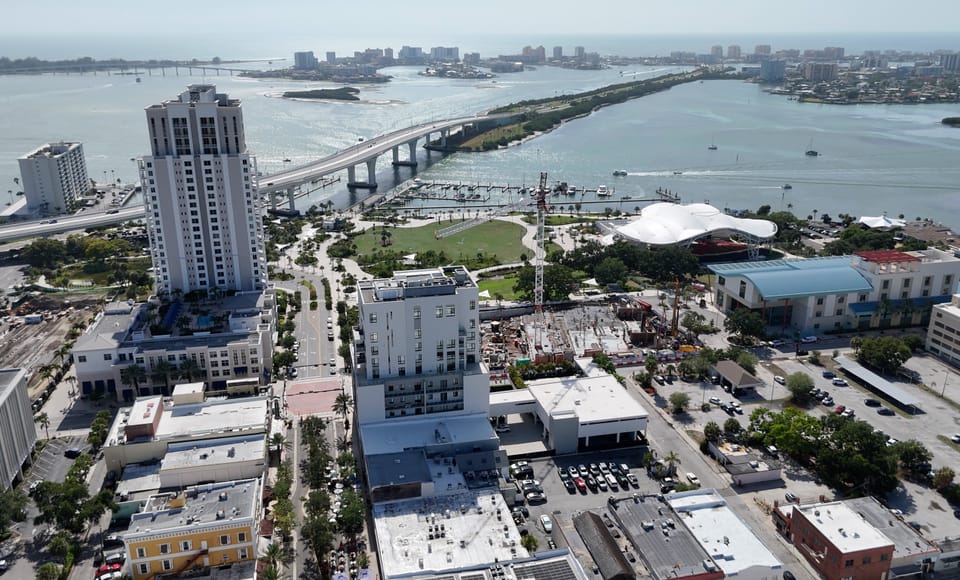
For the past several days, I’ve been reading through the Urban Land Institute’s 2014 Advisory Services Panel report on downtown Clearwater. Although the report is more than a decade old, one thing struck me almost immediately:
Many of the problems it identifies are still the same problems we’re talking about today.
What’s fascinating isn’t just what the report recommends. It’s how accurately it describes Clearwater’s underlying challenge. Contrary to popular belief, the issue has never been a lack of plans. Clearwater has commissioned redevelopment studies for decades. The city isn’t suffering from a shortage of ideas.
It’s suffering from a shortage of cooperation.
Balkanization Equals Decline
One sentence in the report jumped off the page at me:
“Experience has provided the closest thing we have to an immutable law of economic development: Balkanization equals decline.”
That’s an incredibly powerful observation.
The panel found that virtually every group they interviewed wanted the same outcome: a thriving downtown, successful businesses, attractive public spaces, and economic opportunity. Yet nearly every group also believed someone else was preventing that from happening.
Everyone wanted success.
Everyone claimed to be willing to cooperate.
Everyone believed somebody else was the problem.
That dynamic creates paralysis.
The report argues that cities trapped in endless finger-pointing inevitably fall behind those willing to work together. I think that’s just as true today as it was in 2014.
Clearwater Is More Than the Beach
When people think of Clearwater, they usually think of Clearwater Beach.
The beach has become the destination.
Downtown Clearwater has become something people simply drive through on their way there.
That’s unfortunate because downtown has assets that many cities would envy.
The waterfront, the Intracoastal Waterway, abundant wildlife, excellent fishing, rich history, and beautiful public spaces already exist. The challenge isn’t creating these things.
It’s giving people a reason to experience them.
The ULI report specifically warns against trying to make downtown into a copy of the beach. Instead, it argues that downtown should become an authentic place in its own right. One that primarily serves its own residents.
Ironically, that’s exactly what makes places attractive to visitors.
Authenticity cannot be manufactured.
Building a City for Its Residents
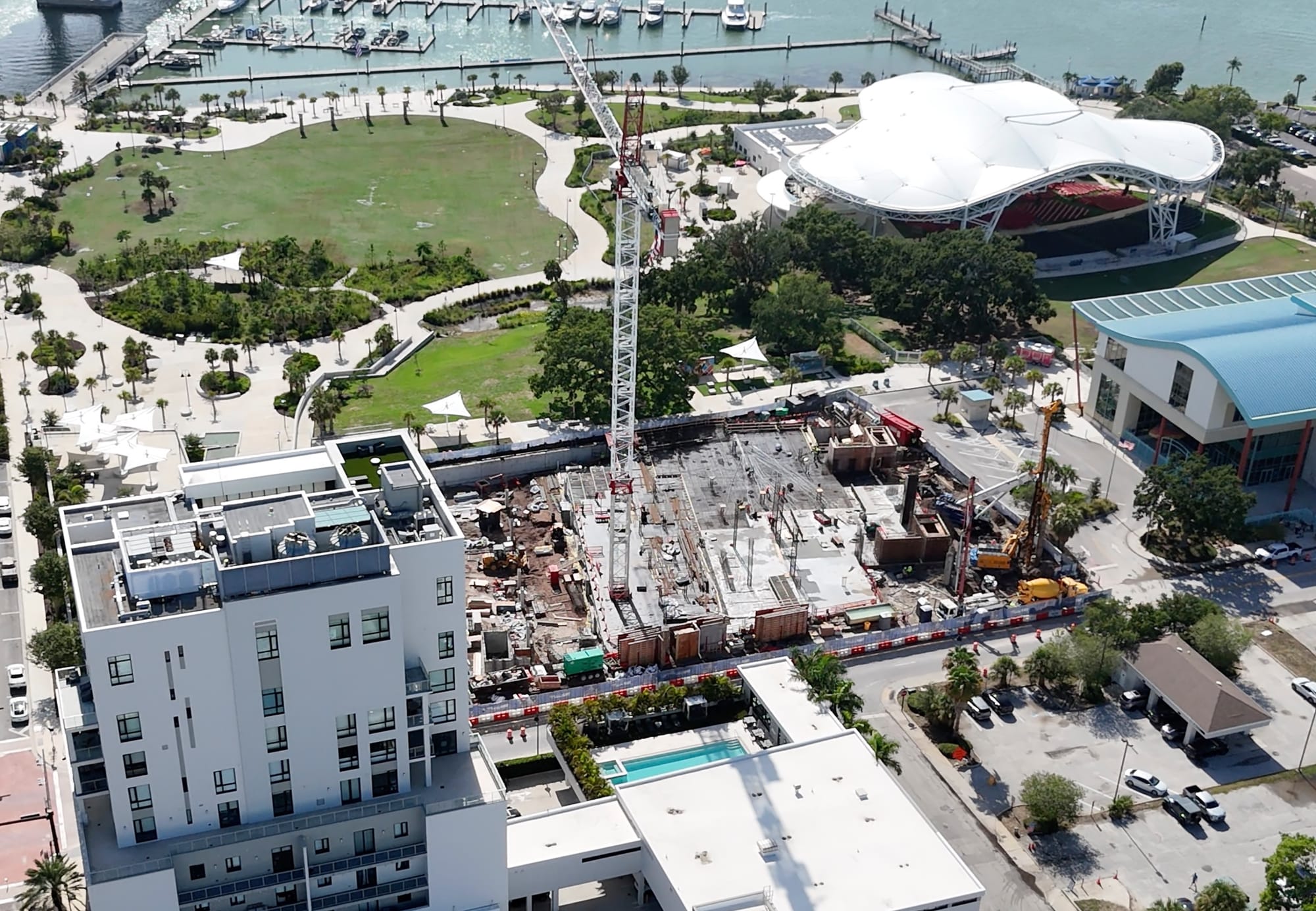
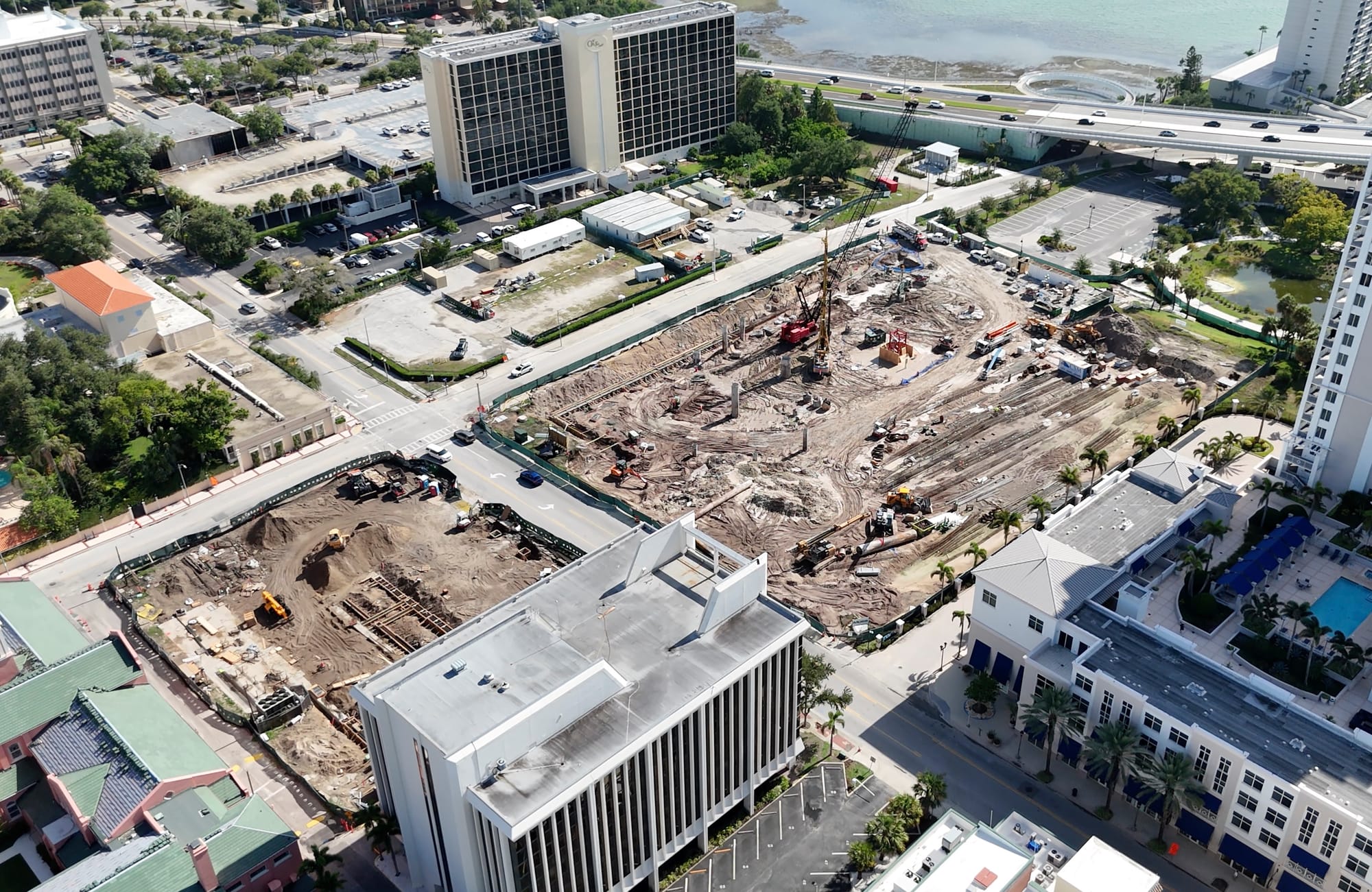
Another recommendation that has clearly begun to materialize is adding residential housing downtown.
Restaurants, cafés, entertainment venues, and retail shops don’t survive on occasional tourists alone. They need a permanent customer base.
People have to live downtown.
Once residents are there, businesses become sustainable.
Then visitors naturally follow.
The report describes this almost as a chain reaction:
A healthy downtown serves residents first.
An authentic downtown attracts visitors naturally.
Trying to reverse that order rarely works.
As can be seen with these two major construction projects happening downtown right now, the residences are under construction.
Ready or not, here they come.
Renovation Comes Before Recruitment
One observation in the report also mirrors what other redevelopment groups have said more recently.
You cannot attract high-quality businesses if the buildings themselves have been allowed to deteriorate.
No first-class restaurant wants to move into a neglected storefront.
No premium retailer wants to invest in a building that’s been vacant for years.
Before you recruit great operators, you have to create an environment worthy of them.
That means renovation.
It means investment.
Someone has to go first.
The Scientology Question
No discussion of downtown Clearwater can ignore the Church of Scientology.
The ULI panel certainly didn’t.
One point that often gets overlooked is that the report did not conclude the Church was intentionally trying to harm downtown Clearwater. Instead, the panel emphasized something much broader: every major stakeholder—including the Church—needed to participate in a shared vision for the city’s future.
Since that report was published, Scientologists and Scientology-affiliated investors have purchased numerous vacant and deteriorating properties downtown.
Critics interpret those purchases one way.
Supporters interpret them another.
Regardless of where someone stands, the larger question remains the same:
How can every constituency work together to improve Clearwater rather than treating redevelopment as a zero-sum contest?
That’s the conversation the report repeatedly tries to steer readers toward.
Clearwater Needs to Tell Its Own Story
Perhaps my favorite section of the report deals with communication.
The panel writes that Clearwater has largely allowed other people to define its identity.
I think that’s absolutely true.
For many people outside the area, Clearwater is known almost exclusively because it is home to the international spiritual headquarters of the Church of Scientology.
Whether someone views that positively or negatively, one fact remains:
That single narrative has overshadowed almost everything else the city has to offer.
The report argues that Clearwater should actively tell its own story.
Its waterfront.
Its history.
Its parks.
Its wildlife.
Its culture.
Its people.
Even its name.
“Clearwater” is one of the most naturally evocative city names anywhere in Florida. There’s already a brand waiting to be embraced.
Trust Is the Missing Ingredient
Toward the end of the report comes what I believe is its most important conclusion.
The panel acknowledges that trust is in short supply.
But it also says rebuilding that trust is absolutely essential.
Without it, everything else becomes pointless.
I couldn’t agree more.
Whether those divisions involve neighborhoods, politics, race, business interests, religious organizations, or civic groups, Clearwater cannot afford to waste the talent and energy of entire segments of its population.
Everyone ultimately wants a prosperous city.
Everyone wants safer streets.
Everyone wants thriving businesses.
Everyone wants beautiful public spaces.
The disagreement is usually over how to get there. Not whether we should.
Perhaps the biggest lesson from this report is that the future of Clearwater won’t be decided by another study.
It won’t be decided by another master plan.
It will be decided by whether people who disagree are willing to sit down, speak directly with one another, and work toward a common vision.
Because if the Urban Land Institute got one thing unquestionably right, it’s this:
Communities divided against themselves don’t prosper.
Communities that find common purpose do.
Which are we?

Comments ()